
SEEING
The eye leads the hand
A 2016 review found that accurate perception of the subject and of the drawing is at the heart of drawing skill.
Why we get it wrong doodlejedi
WHAT THE DRAWING RESEARCH FOUND
Most drawing mistakes start in the looking.
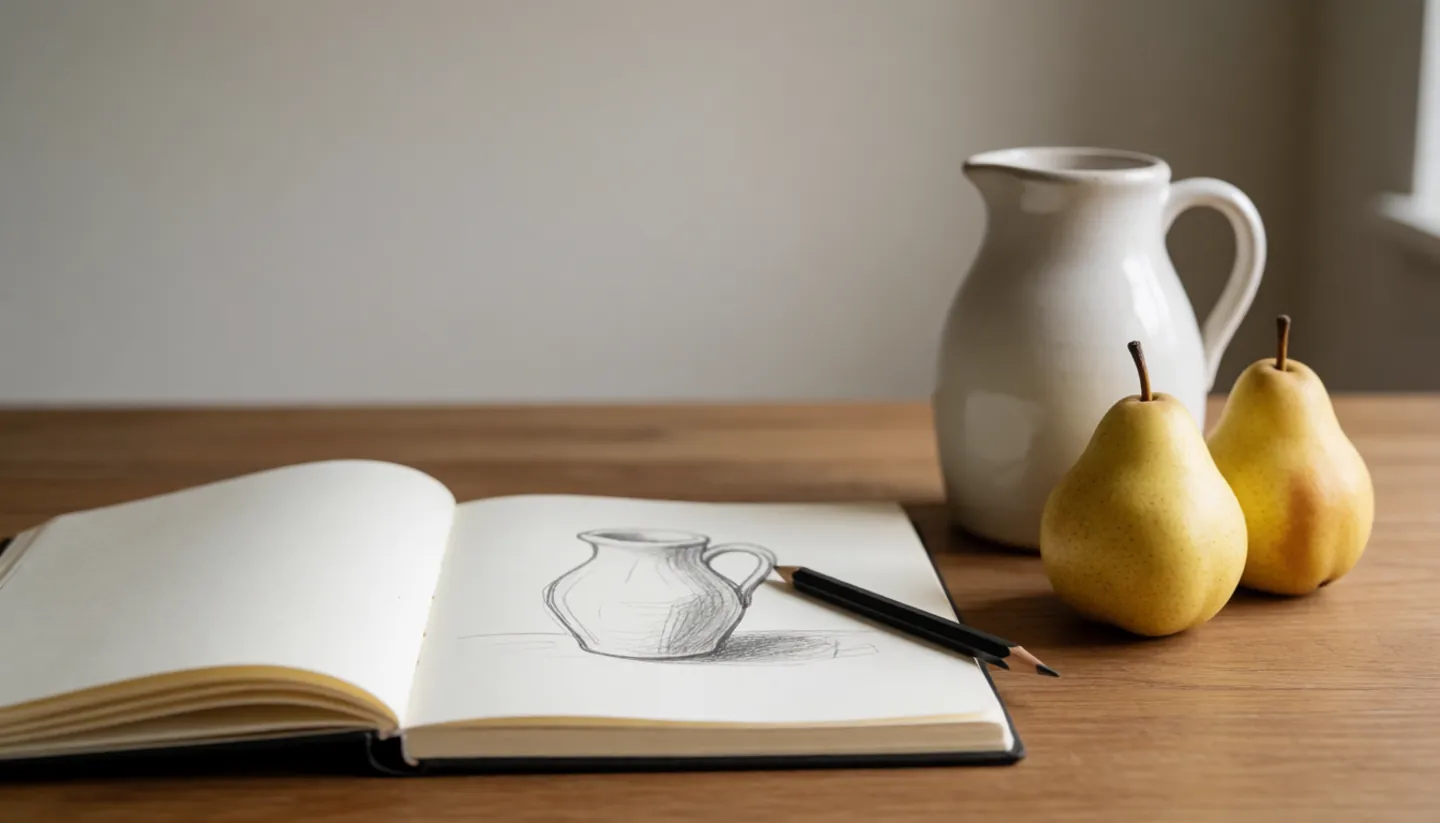
LOOK AGAIN before you draw
30+ years Years before the first formal test
Art teachers have long used mind tricks to help beginners see: turn the picture upside down, draw the spaces between things, forget the name of what you are drawing. Psychologists have now tested some of them. This independent guide sums up what they found.
THE SHORT ANSWER
A Goldsmiths review of the research
puts perception at the heart of drawing skill.
SEEING
A 2016 review found that accurate perception of the subject and of the drawing is at the heart of drawing skill.
Why we get it wrongUPSIDE DOWN
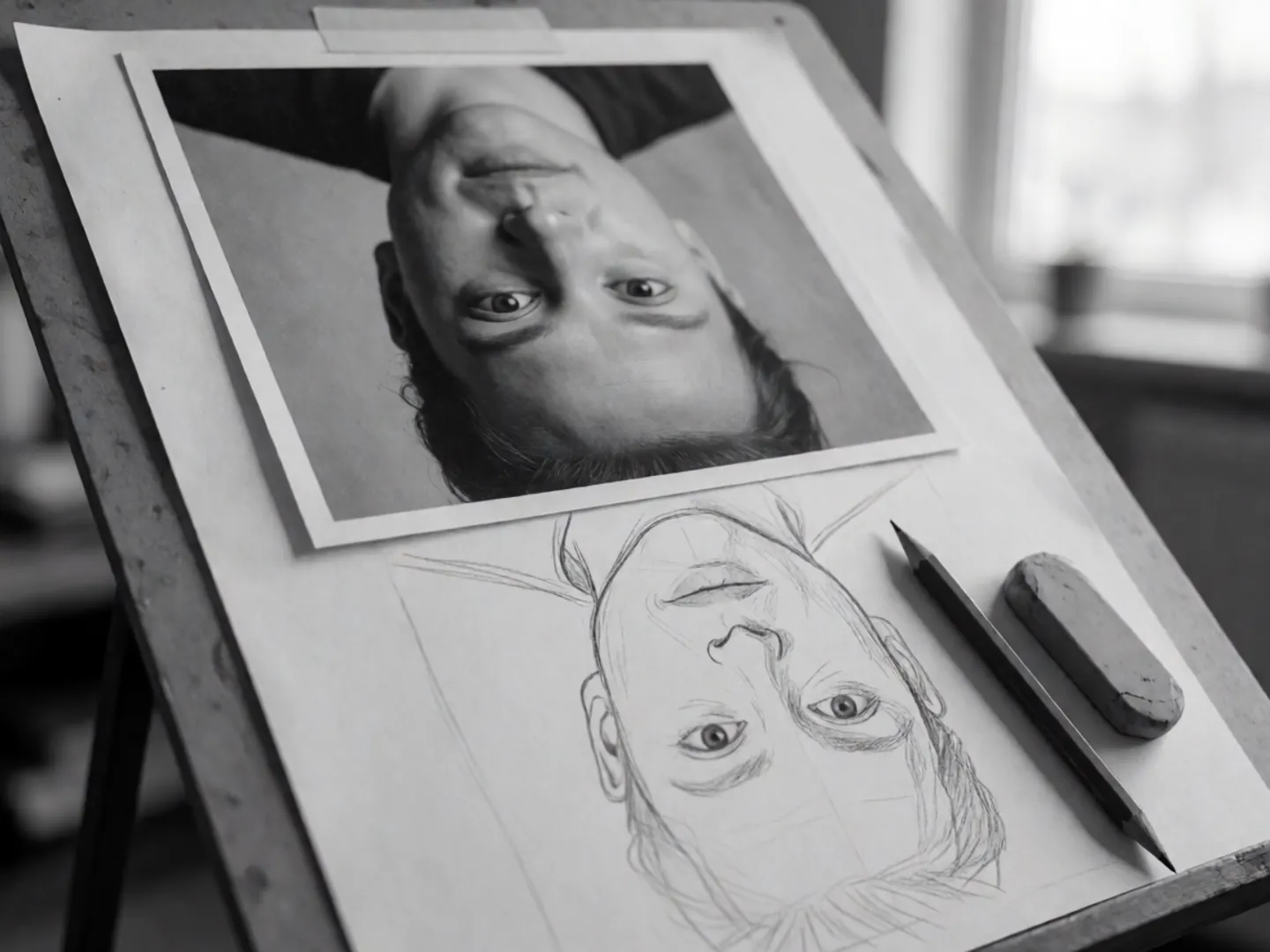
In tests with faces, copies of upside-down models were less accurate for the distance between eyes and mouth, and no better for small details.
See the studiesNEGATIVE SPACE
One study found the angle of the spaces between things was drawn more accurately than the angle of recognisable shapes, though their proportions were less accurate.
Compare the tricksA QUICK TRICK CHECK
Pick a technique beginners are often taught. The bar shows how strongly the studies in the review back it up, from weak or mixed to well supported.
Summarised from Chamberlain and Wagemans (2016) and the face-drawing studies listed in the sources. Research on drawing is still small, so treat these as early findings.
FOUR WAYS TO PRACTISE SEEING
These are exercises drawn from what the studies tested. None needs special materials: a pencil, paper and something to look at.
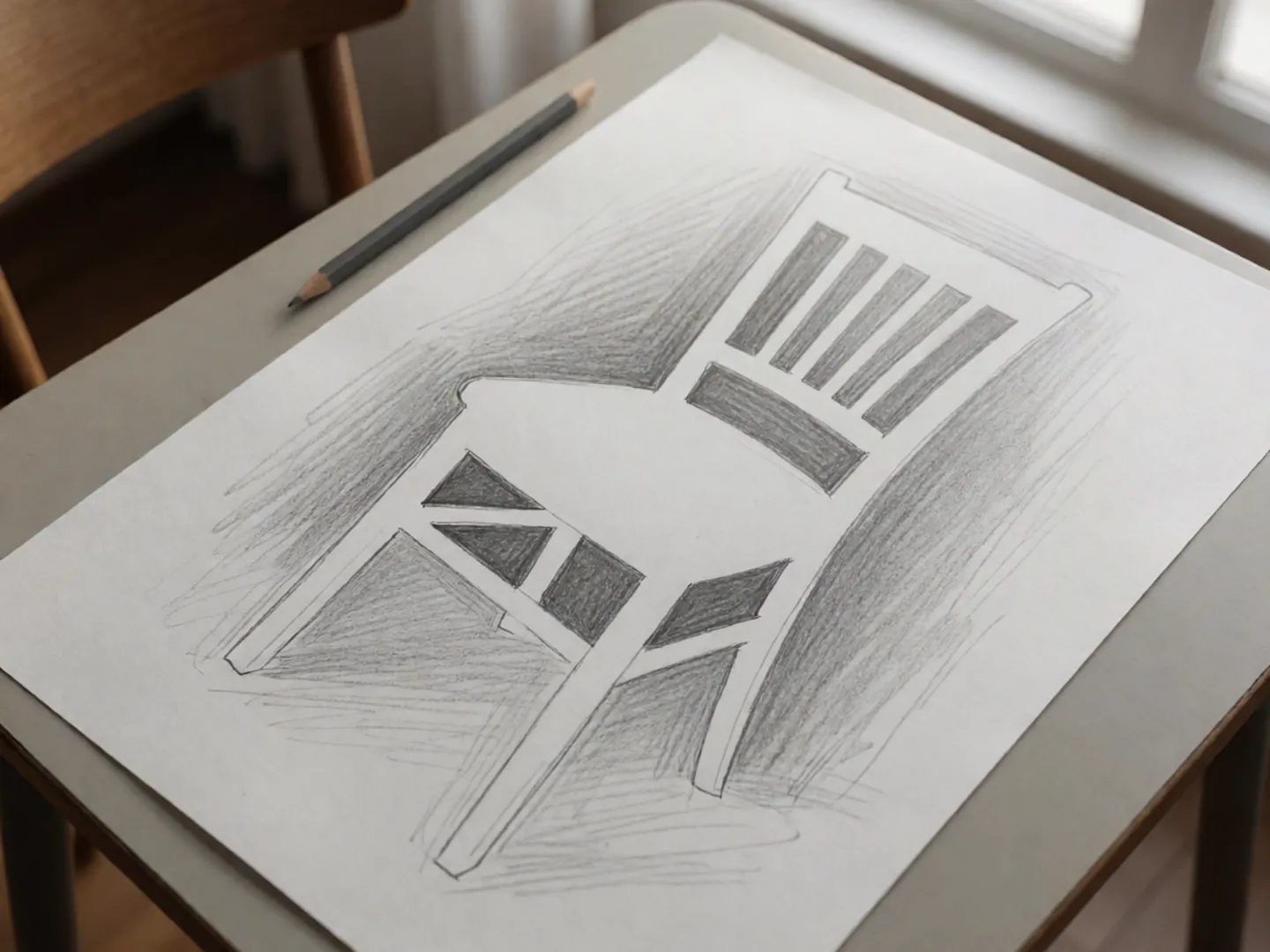
The review stresses accurate perception of your own drawing as well as the subject, so compare the two often.
Shade the spaces between chair legs or branches; in one study their angles came out more accurately.
Labels pull drawings towards a stock shape, so draw the lines you can see, not the object you know.
For faces, the tests found upright models gave more accurate spacing than upside-down ones.
TWO NUMBERS WORTH KNOWING
Upside-down copying was taught for decades
before anyone measured whether it worked.
30+ years
Years before the first formal test
The authors write that upside-down drawing was widely taught but did not receive any formal scientific test for over 30 years, until a study in 2010.
UNTESTED · OSTROFSKY ET AL. 2016
126 students
Students who drew a face both ways
Students with no formal drawing training copied a face upright and upside down. The eyes-to-mouth distance was drawn less accurately from the upside-down model.
THE TEST · OSTROFSKY ET AL. 2016
A separate UC Santa Cruz study measured 66 landmark points on each copied face profile and found drawings were significantly more accurate for upright faces than inverted ones.
WHY BEGINNERS GO WRONG
Researchers describe novice drawings as partly built from stored symbols: a smile as a U-shaped line, eyes as ovals, a head as a circle. A 1932 study found that giving ambiguous line drawings a label changed how people drew them, towards the labelled object.
The errors are systematic, not random. Studies of face drawing found non-artists often place the eyes too high up the head. The review concludes that skill depends on flexible, trained control of visual attention rather than a fundamentally different way of seeing.
Questions
Not in the face-drawing tests so far. One study found no difference, another found lower accuracy for the eyes-to-mouth distance, and one found a small benefit when expert artists judged the results.
A 2016 review in Neuroscience and Biobehavioral Reviews concluded that accurate perception of the subject and of the drawing is at the heart of drawing skill, together with how we break up the scene and the stored shapes we fall back on.
The space between objects or parts of a scene. One study found its orientation was drawn more accurately than recognisable shapes, while proportions of the shapes themselves were drawn more accurately than the gaps.
Not fundamentally, according to the review. It found the evidence linking perceptual illusions and constancies to drawing skill inconclusive, and points instead to trained, flexible attention.
No. It is an independent guide to the psychology of drawing. The name is used only in the general sense of mind tricks and focus.
Updated
ABOUT THIS NAME
doodlejedi.com is part of the DoodleSale portfolio. It isn't in an auction right now, but you can ask about leasing it.

